
The recent rise of generative AI tools like ChatGPT, Bard, Midjourney, and many others has given an incredible boost to the field of Artificial Intelligence. Whether among IT professionals or the general public, AI has returned to the center of our concerns.
However, when you look at the history of AI, it may seem surprising that an AI is only now learning to correctly answer a question, or to analyze and modify a photo, especially when you consider that AIs have been regularly beating world champions at games like chess, backgammon, and checkers for nearly 30 years.
Source: Pixabay
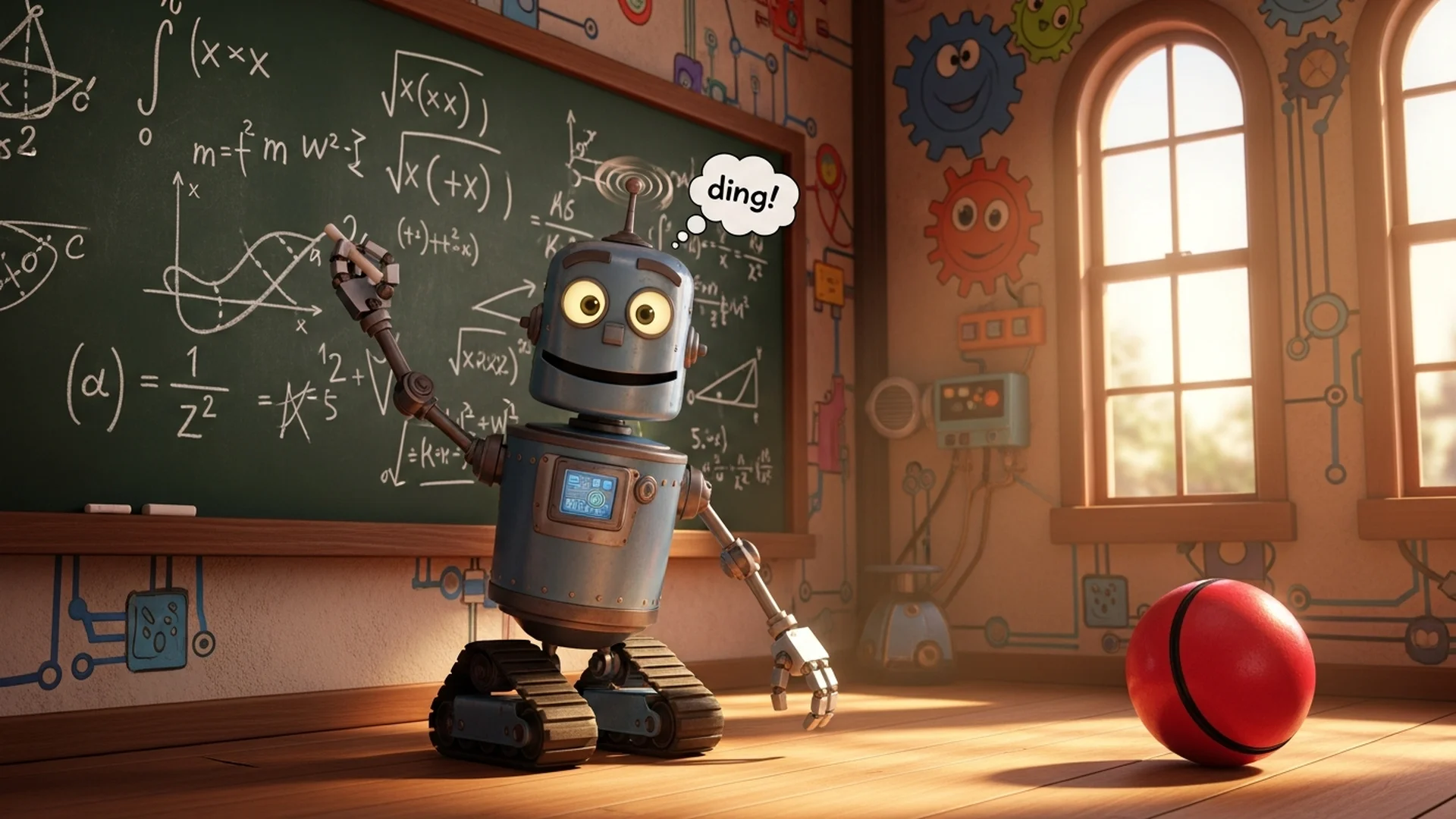
After all, for us humans, holding a conversation or analyzing images is much easier than beating a world champion at chess or backgammon. And that is precisely the Moravec paradox: the observation that, for an AI, it takes far less computing power to perform logical reasoning than to perceive and analyze sensory input.
Origin of This Paradox
This paradox was first formulated by Hans Moravec in 1988, while he was a researcher at the Robotics Institute of Carnegie Mellon University in Pittsburgh. He stated that it is easier to create an AI that can match adult-level performance on an intelligence test than to create an AI capable of matching the sensory perception of a one-year-old child.
Moravec offered several explanations for this. The first is that, for humans, it is very difficult to reverse engineer human capabilities, especially the unconscious ones. To give an example, it is very difficult to explain how we differentiate a pencil from a pen, or even harder, how we determine that a cathode-ray tube television is a television, just like a flat-screen television.
LCD television. Source: Pixabay
CRT television. Source: Pixabay
The second explanation he gives is more fundamental. The sensory capabilities that humans have acquired come from millions of years of evolution. These capabilities are essential for human survival, and therefore individuals with better capabilities had an advantage in natural selection. This process allows us to no longer be conscious of these mechanisms; we just do them. In contrast, the ability to perform logical reasoning is a more recent capability, arguably not necessary for survival, and therefore less intuitive for humans.
Are These Hard Limits for AI?
Once this paradox is understood, it becomes clearer why generative AIs arrived much later than AIs that beat humans at certain games. But does this mean that certain domains remain out of reach for AI? If we look at today's landscape, artificial intelligences are continuously improving and performing tasks that were once thought impossible. We can have conversations with them, they can generate images, Boston Dynamics has built robots that can maintain balance, and so on...
Even though AIs remain specialized, typically covering only one specific domain, they keep improving, and if there are hard limits, we do not seem to have encountered them yet.

Yohann Jolain
Archi IA & IT
Pilier de Lamalo, Yohann allie expertise technique et pédagogie. Archi dans l'âme, développeur de talent, il apporte son énergie et ses compétences à la scale-up Lamalo. Pédagogue, il n'hésite pas à partager son savoir.
LinkedInSimilar articles
Newsletter
Get our best articles every month.
Go further
Article
Comment on a connecté notre IA à notre logiciel financier — et pourquoi ça change tout!!
Articlen8n, c'est quoi ce truc ?
Père Castor, raconte-moi n8n n8n (prononcez « n-huit-n » ou « nodemation » si vous voulez faire classe). C'est un outil qui permet de connecter vos...
ArticleComment l'IA révolutionne le marketing (sans vous remplacer)
L'intelligence artificielle s'est invitée dans le quotidien des marketeurs à une vitesse record. En quelques mois, des outils comme ChatGPT,...
ArticleGrille d'évaluation des besoins de formation IA : Le guide pour DRH et Managers
Le risque ? Créer une \"illusion de compétence\" tout en laissant les véritables lacunes stratégiques se creuser. La solution est pourtant simple et...
ArticleLa France a-t-elle déjà perdu la bataille de l'IA ?
À lire avec la voix de Stallone : « plus de puces, plus de data, plus de milliards, le maître du monde ». Je viens de regarder le dernier numéro du...
ArticleL'IA : l'Impératif de Gouvernance Ultime
Soyons clairs : si vous dirigez une organisation de taille significative aujourd'hui, la complexité des données, leur volume, leur vitesse de...